



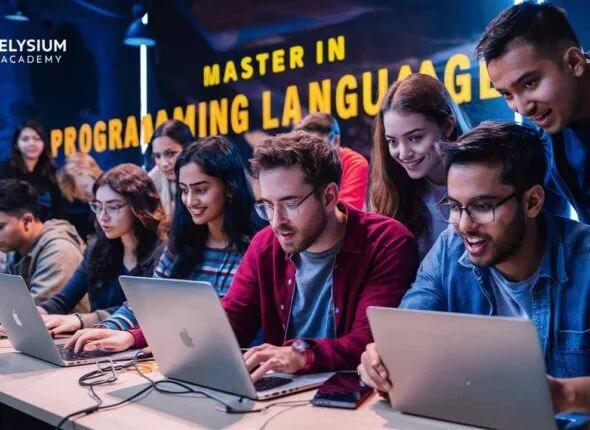
Master in Programming Language Training Course (Core Java, Core Python)

What the specialist says

This Java track isn’t just theory — it turns you into someone who can actually ship applications.

Vikram Nair Java Application Specialist

Acquire Key Programming Skills: Master Java and Python, Earn Certification, Launch Your Dev Career! DevLustro Academy has carved out its niche as a forerunner in the programming domain, providing a comprehensive product that ensures participants harness, interpret, and utilize programming skills in ways never before imagined. DevLustro Academy has carved out its niche as a forerunner in the programming domain, providing a comprehensive product that ensures participants harness, interpret, and utilize programming skills in ways never before imagined. Course was selected for our collection of top-rated courses trusted by businesses worldwide.

Our Core Highlights

World Class Instructor
World Class Instructor Mentorship from global experts
1:1 with Industry Expert
1:1 with Industry Expert Personalised coaching tailored to you
Global Hiring Network
Global Hiring Network 400+ hiring partners around the world
Average Salary Hike
Average Salary Hike 55% average hike for our alumni

Course Description

Acquire Key Programming Skills: Master Java and Python, Earn Certification, Launch Your Dev Career! Elysium Academy has carved out its niche as a forerunner in the programming domain, providing a comprehensive product that ensures participants harness, interpret, and utilize programming skills in ways never before imagined. Elysium Academy has carved out its niche as a forerunner in the programming domain, providing a comprehensive product that ensures participants harness, interpret, and utilize programming skills in ways never before imagined. Course was selected for our collection of top-rated courses trusted by businesses worldwide.

Programming Development Course

Course Details

Harness powerful libraries in Python like NumPy and Pandas for data manipulation and analysis.

Visualize data effectively using Matplotlib and Seaborn.

Implement machine learning algorithms with Scikit-learn.

Explore deep learning techniques with TensorFlow.

Programming is the foundation that powers the development of software applications.

Programming involves the comprehensive study of coding practices and algorithms.

Code Optimization is where the code is refined, and all inefficiencies are eliminated.

Programmers understand coding principles and derive meaningful solutions to complex problems.

Programming is the substructure on which advanced technologies like Artificial Intelligence and Machine Learning are built.

Course Goals

  • Master in Programming Language Training Course (Core Java, Core Python)
  • Master Java fundamentals, including syntax, data types, loops, and functions.
  • Dive into advanced concepts such as object-oriented programming (OOP) and exception handling.

Future Scope of this Course

  • Industry Based Projects
  • Recognized worldwide

Our Career Service

  • Personalized coordinator.
  • Trainer feedback.
  • Trainer availability post sessions.
  • Get your staff certified.
  • Certificate from governing bodies.

Our Training Program Benefits

  • Hands on assignment
  • Curriculum that focuses on the learner.
  • Live, interactive training by DevLustro experts.
  • Curriculum aligned with current industry practices.
  • Portfolio / project support for real-world use.
01Chapter-1 Introduction To Script
  • 01.01What is Script, program?
  • 01.02Types of Scripts
  • 01.03Difference between Script and Programming Languages
  • 01.04Features and Limitation of Scripting
  • 01.05Types of programming Language Paradigms
  • 01.06What is Python?
  • 01.07Why Python?
  • 01.08Who Uses Python?
  • 01.09Characteristics of Python
  • 01.10What is PSF?
  • 01.11History of Python
  • 01.12Python Versions
  • 01.13How to Download and Install Python
  • 01.14Install Python with Diff IDEs
  • 01.15Features and Limitations of Python
  • 01.16Creating Your First Python Program Python Applications
  • 01.17Printing to the Screen
  • 01.18Reading Keyboard Input
  • 01.19Using Command Prompt and GUI or IDE
  • 01.20Python Distributions
02Chapter-2 Different Modes In Python
  • 02.01Execute the Script
  • 02.02Interactive and Script Mode
  • 02.03Python File Extensions
  • 02.04SETTING PATH IN Windows
  • 02.05Clear screen inside python
  • 02.06Learn Python Main Function
  • 02.07Python Comments
  • 02.08Quit the Python Shell
  • 02.09Shell as a Simple Calculator
  • 02.10Order of operations
  • 02.11Multiline Statements
  • 02.12Quotations in Python
  • 02.13Python Path Testing
  • 02.14Joining two lines
  • 02.15Python Implementation Alternatives
  • 02.16Sub Packages in Python
  • 02.17Uses of Python in Data Science, IoT
  • 02.18Working with Python in Unix/Linux/Windows/Mac/Android..!!
  • 02.19PyCharm IDE
  • 02.20How to Work on PyCharm PyCharm Components
  • 02.21Debugging process in PyCharm PYTHON Install Anaconda
  • 02.22What is Anaconda? Coding Environments
  • 02.23Spyder Components General Spyder Features
  • 02.24Spyder Shortcut Keys
  • 02.25Jupyter Notebook
  • 02.26What is Conda? And Conda List?
  • 02.27Jupyter and Kernels
  • 02.28What is PIP?
03Chapter-3 Variables in Python
  • 03.01What is Variable?
  • 03.02Variables and Constants in Python
  • 03.03Variable, Variable names and Value
  • 03.04Mnemonic Variable Names Values and Types
  • 03.05What Does "Type" Mean?
  • 03.06Multiple Assignment
  • 03.07Python different numerical types Standard Data Types
  • 03.08Operators and Operands
  • 03.09Order of Operations Swap variables
  • 03.10Python Mathematics Type Conversion
  • 03.11Mutable Versus Immutable Objects
  • 03.12What is a data type?
  • 03.13Types of Data types
  • 03.14Numbers
  • 03.15List
  • 03.16Tuple
  • 03.17Strings
  • 03.18Dictionary
  • 03.19Sets
  • 03.20Lists are mutable
  • 03.21Getting to Lists
  • 03.22List indices
  • 03.23Traversing a list
  • 03.24List operations, slices and methods
  • 03.25Map, filter and reduce
  • 03.26Deleting elements
  • 03.27Lists and strings
  • 03.28Advantages of Tuple over List
  • 03.29Packing and Unpacking Comparing tuples
  • 03.30Creating nested tuple Using tuples as keys in dictionaries
  • 03.31Deleting Tuples Slicing of Tuple
  • 03.32Tuple Membership Test Built-in functions with Tuple
04Chapter-4 Dictionary
  • 04.01How to create a dictionary?
  • 04.02PYTHON HASHING? Python Dictionary Methods
  • 04.03Copying dictionary Updating Dictionary
  • 04.04Delete Keys from the dictionary Dictionary items() Method
  • 04.05Sorting the Dictionary Python Dictionary in-built Functions
  • 04.06Dictionary len() Method
  • 04.07Variable Types Python List cmp() Method
  • 04.08Dictionary Str(dict)
  • 04.09How to create a set?
  • 04.10Iteration Over Sets Python Set Methods
  • 04.11Python Set Operations Union of sets
  • 04.12Built-in Functions with Set
  • 04.13Python Frozenset
  • 04.14What is string?
  • 04.15String operations and indices Basic String Operations
  • 04.16String Functions, Methods
  • 04.17Delete a string
  • 04.18String Multiplication and concatenation
  • 04.19Python Keywords, Identifiers and Literals
  • 04.20String Formatting Operator
  • 04.21Structuring with indentation in Python
  • 04.22Built-in String Methods
05Chapter-5 Python Operators
  • 05.01Arithmetic, Relational Operators and Comparison Operators
  • 05.02Python Assignment Operators Short hand Assignment Operators
  • 05.03Logical Operators or Bitwise Operators Membership Operators
  • 05.04Identity Operators Operator precedence
  • 05.05Evaluating Expressions
  • 05.06How to use "if condition" in conditional structures
  • 05.07if statement (One-Way Decisions)
  • 05.08if.. else statement (Two-way Decisions)
  • 05.09How to use "else condition"
  • 05.10if.. elif .. else statement (Multi-way)
  • 05.11When "else condition" does not work
  • 05.12How to use "elif” condition
  • 05.13How to execute conditional statement with minimal code
  • 05.14Nested IF Statement
06Chapter-6 Operators & Python Loops
  • 06.01What is an operator?
  • 06.02Different type of operators
  • 06.03Arithmetic Operators
  • 06.04Assignment operator
  • 06.05Unary minus operator
  • 06.06Relational operators
  • 06.07Logical operators
  • 06.08Membership operators
  • 06.09Identity operators
  • 06.10How to use "While Loop" and "For Loop"
  • 06.11How to use For Loop for set of other things besides numbers
  • 06.12Break statements, Continue statement, Enumerate function for For Loop
  • 06.13Practical Example How to use for loop to repeat the same statement over and again
  • 06.14Break, continue statements
  • 06.15Logistic Regression
07Chapter-7 Python Functions
  • 07.01What is a function?
  • 07.02How to define and call a function in Python Types of Functions
  • 07.03Significance of Indentation (Space) in Python How Function Return Value?
  • 07.04Types of Arguments in Functions
  • 07.05Default Arguments and Non-Default Arguments
  • 07.06Keyword Argument and Non-keyword Arguments Arbitrary Arguments
  • 07.07Rules to define a function in Python
  • 07.08Various Forms of Function Arguments > Scope and Lifetime of variables
  • 07.09Nested Functions
  • 07.10Call By Value, Call by Reference
  • 07.11Anonymous Functions/Lambda functions
  • 07.12Passing functions to function
  • 07.13map(), filter(), reduce() functions
  • 07.14What is a Docstring?
  • 07.15Lambda function
  • 07.16Filter function
  • 07.17Reduce function
  • 07.18Map function
  • 07.19Define the Keras Neural Network Model
08Chapter-8 List Comprehension
  • 08.01Introduction
  • 08.02Generator Comprehension
  • 08.03Set Comprehension
  • 08.04Importing module
  • 08.05Math module
  • 08.06Random module
  • 08.07Packages
  • 08.08Composition
  • 08.09Printing on screen
  • 08.10Reading data from keyboard
  • 08.11Opening and closing file
  • 08.12Reading and writing files
  • 08.13Functions
09Chapter-9 Exception Handling
  • 09.01Exception
  • 09.02Exception Handling
  • 09.03Except clause
  • 09.04Try...finally clause
  • 09.05User Defined Exceptions
  • 09.06Match function
  • 09.07Search function
  • 09.08Matching VS Searching
  • 09.09Modifiers
  • 09.10Patterns
10Chapter-10 Packages
  • 10.01Predefined Packages
  • 10.02User Defined
  • 10.03Text Files
  • 10.04Binary Files
  • 10.05Zip and Unzip Files
  • 10.06Pickling
  • 10.07Unpickling
  • 10.08Reading Program from another Program In Command Prompt
  • 10.09Python File Handling
  • 10.10Python Read Files
  • 10.11Python Write/Create Files
  • 10.12Python Delete Files
11Chapter-11 Basics of JAVA
  • 11.01Download Links
  • 11.02Method and Installation of Java on Windows
12Chapter-12 Data Types
  • 12.01Variable declaration
  • 12.02Initialization of Variable
  • 12.03Naming convention
  • 12.04Types of variables
  • 12.05Memory allocation of variables
13Chapter-13 Control Statements
  • 13.01IF-ELSE
  • 13.02Switch
  • 13.03For loop
  • 13.04While loop
  • 13.05Do-while loop
  • 13.06Break
  • 13.07Continue
14Chapter-14 METHODS
  • 14.01Use of method
  • 14.02Method declaration
  • 14.03Method signature
  • 14.04Calling of method
  • 14.05Java main method
  • 14.06Return type
15Chapter-15 OOPS & Concepts
  • 15.01Types of Constructor
  • 15.02Constructor Overloading
  • 15.03Copy Constructor
  • 15.04Definition
  • 15.05Data Hiding
  • 15.06Getter and setter method
  • 15.07The Naming convention for the Getter and Setter methods
  • 15.08Definition
  • 15.09Is-A-Relationship
  • 15.10Types of Inheritance
  • 15.11Aggregation and Composition
  • 15.12Definition
  • 15.13Types of polymorphism
  • 15.14Method Overloading
  • 15.15Method overriding
  • 15.16Definition
  • 15.17Super class Methods and Constructor
  • 15.18Abstract class
  • 15.19Abstract method
  • 15.20Nested interface, rules, and example programs
16Chapter-16 Keywords & Modifiers
  • 16.01Access modifier and a non-access modifier
  • 16.02Types of access modifiers
  • 16.03Types of non-access modifiers
  • 16.04Static variable
  • 16.05Static methods
  • 16.06The distinctions between a static variable and an instance variable
  • 16.07Final variable
  • 16.08Final methods
  • 16.09Final class
  • 16.10Definition
  • 16.11Types
17Chapter-17 Exception Handling
  • 17.01Try,Catch,Finally Throw
  • 17.02Throw,Throws in Exceptional Handling
  • 17.03Throw vs. Throws
  • 17.04Final vs. Finally vs. Finalize
18Chapter-18 Input-Output Stream
  • 18.01Character Stream
  • 18.02Byte Stream
19Chapter-19 Array & Strings
  • 19.01Definition
  • 19.02Types of Array
  • 19.03Array Programs
  • 19.04Definition
  • 19.05Immutable String
  • 19.06String Comparison
  • 19.07String Concatenation
  • 19.08Substring
  • 19.09String Buffer Class
  • 19.10String Builder Class
  • 19.11toString() method
20Chapter-20 Collections & Framework
  • 20.01Introduction to Lambda Expression
  • 20.02Parameters in Lambda Expression
  • 20.03Java time Classes
  • 20.04Data Formatter
  • 20.05Calendar and Time Zone
21Chapter-21 Thread
  • 21.01Multithreading
  • 21.02Multithreading life cycle
  • 21.03Thread scheduler
  • 21.04Calling method
  • 21.05Joining a thread
  • 21.06Naming a thread
  • 21.07Thread priority
  • 21.08Daemon thread
  • 21.09Thread pool
  • 21.10Thread Group
  • 21.11Shutdown hook
  • 21.12Java Synchronization
  • 21.13Deadlock
  • 21.14Inter-thread Communication
  • 21.15Interrupting Thread
22Chapter-22 Java Networking
  • 22.01Socket Programs
23Chapter-23 JDBC
  • 23.01JDBC Drivers
  • 23.02Connecting steps to Database
  • 23.03Connectivity with MySQL
  • 23.04Connectivity with Access without DSN
  • 23.05Driver Manager
  • 23.06Types of JDBC statements
  • 23.07Database Metadata, Resultset Metadata
  • 23.08ResultSet,types of ResultSet
  • 23.09Storing images,Retrieving image
  • 23.10Storing files, Retrieving files, Stored procedures, and functions
  • 23.11Transaction Management
  • 23.12Batch Processing
24Chapter-24 SQL
  • 24.01What is DQL?
  • 24.02Purpose of DQL
  • 24.03Select
  • 24.04What is DML?
  • 24.05Purpose of DML
  • 24.06Insert data
  • 24.07Update data
  • 24.08Delete data
  • 24.09Lock data
  • 24.10What is DCL?
  • 24.11Purpose of DCL
  • 24.12Grant data
  • 24.13Revoke data
  • 24.14What is TCL?
  • 24.15Purpose of TCL
  • 24.16COMMIT
  • 24.17ROLLBACK
  • 24.18SAVEPOINT
  • 24.19Hands on INSERT data
  • 24.20SELECT
  • 24.21Hands on SELECT query
  • 24.22Multi inserts
  • 24.23Hands on Multi inserts
  • 24.24NOT NULL
  • 24.25Hands on NOT NULL
  • 24.26DEFAULT Values
  • 24.27Hands on DEFAULT Values
  • 24.28AUTO INCREMENT
  • 24.29Hands on AUTO INCREMENT
  • 24.30ORDER BY
  • 24.31ALIASES
  • 24.32UNIONS
  • 24.33CONSTRAINTS
  • 24.34VIEWS
  • 24.35What is primary key?
  • 24.36Creating a primary key
  • 24.37Dropping a primary key
  • 24.38What is foreign key?
  • 24.39Creating a foreign key
  • 24.40Dropping a foreign key

No FAQ added yet.

Ready to begin?

Master in Programming Language Training Course (Core Java, Core Python)

Duration: 90 Hours

Enroll in

Master in Programming Language Training Course (Core Java, Core Python)

Want to know more?